Court rejects plea seeking exclusive area for customary collections
Allahabad High Court says transgender persons have no legal right to collect ‘badhai’
The Allahabad High Court has ruled that members of the transgender community do not have a legal right to demand or collect traditional payments known as badhai, neg, or similar customary offerings from people. The court said any money collected from citizens must have legal authority, and no person can force others to pay without such authority.
The order was passed by the Lucknow bench of the High Court while hearing a petition filed by a transgender person from Uttar Pradesh’s Gonda district. The petitioner had asked the court to mark a specific area as her exclusive zone for collecting badhai, saying she had been doing so there for many years.
The bench, consisting of Justices Alok Mathur and Amitabh Kumar Rai, dismissed the petition. It said there is no legal provision that grants any exclusive territorial right for such collections. The judges also observed that demanding money without lawful authority may fall under offences described in criminal law.
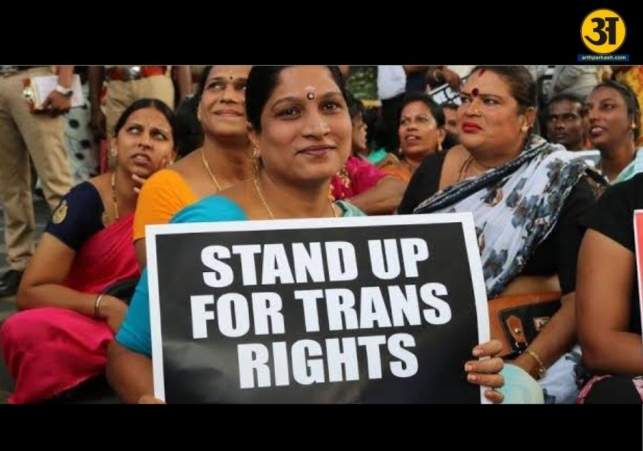
The judgment has drawn attention because it deals with a long-standing social custom that exists in many parts of India. Traditionally, some members of the transgender community visit homes or celebrations such as weddings and childbirth ceremonies to give blessings and receive money or gifts in return.
While this practice has cultural roots, the court said customs cannot override the law.
Why the case reached the court
According to the petition, the applicant claimed she had been collecting badhai in a particular region for several years. She asked the court to officially reserve that area for her, stretching from one local point to another in the district.
Her lawyer argued that disputes often happen when other people from the same community enter the same area and seek collections there. Because of these repeated conflicts, the petitioner wanted the court to recognise the area as her exclusive zone.
The argument presented was that the practice had existed for a long time and should therefore be treated as a customary right.
However, the High Court did not accept that reasoning. It said long use of a practice does not automatically make it legally enforceable.
The judges stated that taxes, levies, charges, or compulsory payments can only be collected when there is authority under law. If no law allows such collection, no person can demand payment from another citizen.
The court further observed that extracting money willingly or unwillingly from individuals cannot be permitted merely in the name of tradition.
This became the central basis for rejecting the plea.
Court refers to legal framework
The bench also noted that the Transgender Persons (Protection of Rights) Act, 2019 gives legal protection and rights to transgender persons, but it does not create any right to collect badhai or reserve territories for such collections.
That law focuses on equality, dignity, protection from discrimination, access to education, employment, healthcare, and welfare measures. It does not authorise collection of money from citizens.
Because of this, the judges said the petition had no legal foundation.
Court warns against legalising forced collections
The High Court said accepting such a request would effectively legalise unauthorised collections and could encourage criminal behaviour.
The judges added that if money is demanded forcefully, through intimidation, pressure, or coercion, it may attract provisions under the Bharatiya Nyaya Sanhita (BNS), India’s criminal law framework.
In simple terms, the court said nobody has the right to compel another person to pay money in the absence of law.
This does not mean voluntary gifts or offerings are banned. If a person freely chooses to give money or gifts during a social event, that remains a private personal decision. But no one can claim a legal right to demand such payments.
That distinction is important. The ruling focuses on compulsory or enforceable collection, not voluntary generosity.
Social and economic background
In many parts of India, members of the transgender community have historically faced social exclusion, family rejection, and limited employment opportunities. Because of this, traditional customs like badhai became one source of livelihood for some people.
Many activists point out that the community still faces barriers in education, housing, healthcare, and formal jobs. They argue that economic hardship often pushes people toward informal or traditional means of earning.
At the same time, courts are required to decide cases based on law, not only social practice. This judgment reflects that legal principle.
The court did not comment against the identity or dignity of transgender persons. Instead, it dealt specifically with whether there is a legal right to demand money or claim exclusive areas for collections.
Wider significance of the ruling
The order may influence future disputes involving territorial claims or forced collection practices in different regions. It sends a clear message that customs must operate within legal limits.
It may also renew debate on the need for stronger economic inclusion of transgender persons. If traditional livelihoods are legally restricted where coercion is involved, there may be greater pressure on governments and society to create genuine alternatives through employment, training, and welfare support.
Rights and responsibilities
The ruling also highlights an important balance in democratic law:
-
Every citizen deserves dignity and equal treatment.
-
Every citizen is protected from unlawful demands for money.
-
Traditions can continue voluntarily, but cannot become compulsory rights without legal backing.
This balance often becomes central in cases involving social customs.
Final outcome of the case
The petition seeking an exclusive area for badhai collections was dismissed. No territorial rights were granted.
The High Court made it clear that such claims are not recognised under law and that any forced extraction of money may invite legal consequences.
The judgment is likely to remain part of wider conversations on customary practices, transgender rights, public order, and economic inclusion in modern India.
Related News